
STOP FEEDING THE BEAST
STOP FEEDING THE BEAST:
How to Convert OTA Dependency Into Direct Booking Growth
I absolutely love a good dashboard. They are fun, sexy, easy to circulate. Here’s the thing though: they often are lying to you about what “success” your media investments are actually driving.
Cost-per-booking from Google and Meta looks reasonable. ROAS is up. And somehow direct bookings still miss forecast by 15, 20, sometimes 30 percent quarter after quarter. If that sounds familiar, it’s not a budget problem. It’s an attribution problem.
Google’s Performance Max (PMax) and Brand SEM are important channels but also can be over-attributed due to its one channel, last-touch attribution. If we lean too much into retargeting and brand search our overall mix is going to be too heavy against consumers that were likely to book anyway. Meta runs the same play, taking credit for bookings with little proof of incrementality. Add it up and you get what we’ve started calling the “three-headed monster”: Meta, PMax, and Google Brand SEM eating most of the media budget while doing little to grow the top of the funnel or the actual business.
This is a true “attribution trap”, and we get addicted to it in our industry. Those Google and Meta platform metrics are like a security blanket that you depend on, but what your business actually earns in incremental revenue has almost no relationship to those metrics. I’ve watched it happen time and time again.

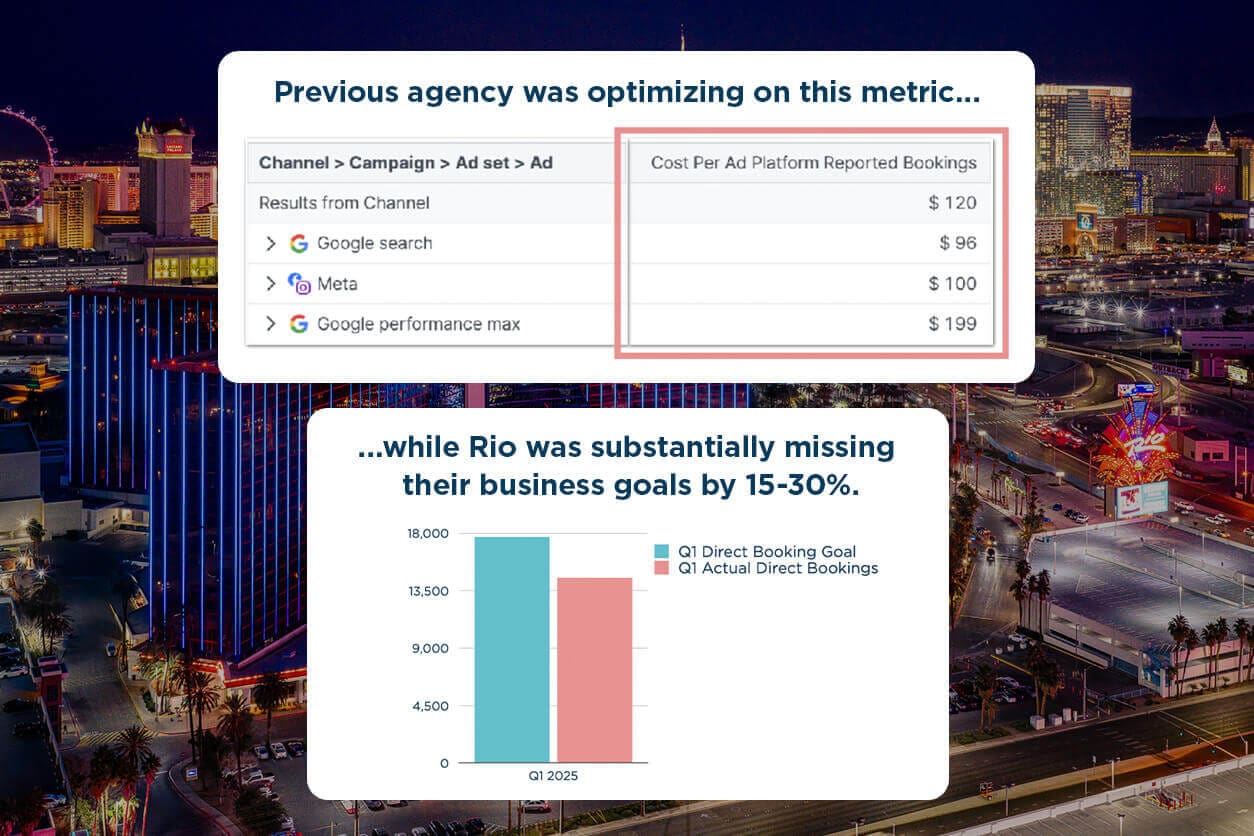
THE PROBLEM: GREAT METRICS. MISSED GOALS.
One of our hotel clients, a major casino resort, was dealing with this exact problem. Steady media spend. Healthy-looking platform metrics. Direct booking goals missed by 15–30% every single quarter.
Their previous agency had been optimizing towards what Google and Meta told them to optimize for instead of direct incremental conversions. The reporting looked great. The business didn’t.
Attribution ≠ performance. That distinction is paramount in our industry.
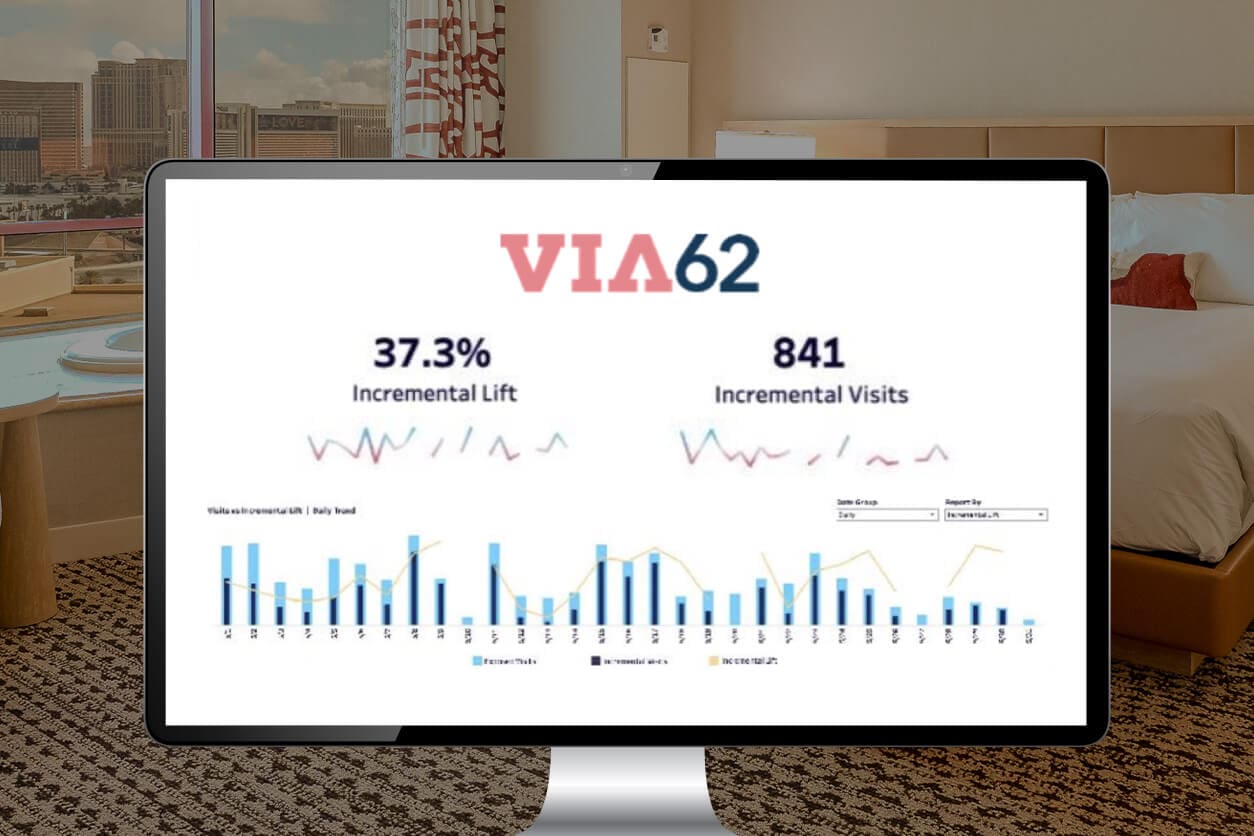
THE FIX: REBUILDING FOR INCREMENTAL REVENUE
We are insatiable about proving that your media spend is actually driving business results. We overhauled the status quo using VIA62, our own performance platform, starting with tearing down the three-headed monster and cutting the spend that was cannibalizing bookings that were coming in anyway. That budget moved up-funnel, into channels built to find people who weren’t already looking:
- Targeted CTV, reaching out-of-state audiences with real incremental intent
- Contextual display, putting the brand somewhere relevant instead of following people around with retargeting
- Incremental audience strategies, aimed at less-qualified consumers who weren’t already in the funnel
Every channel had to earn its spend by proving incremental revenue, or it got cut. VIA62 made that measurable in real time, not something we argued about at quarter-end.
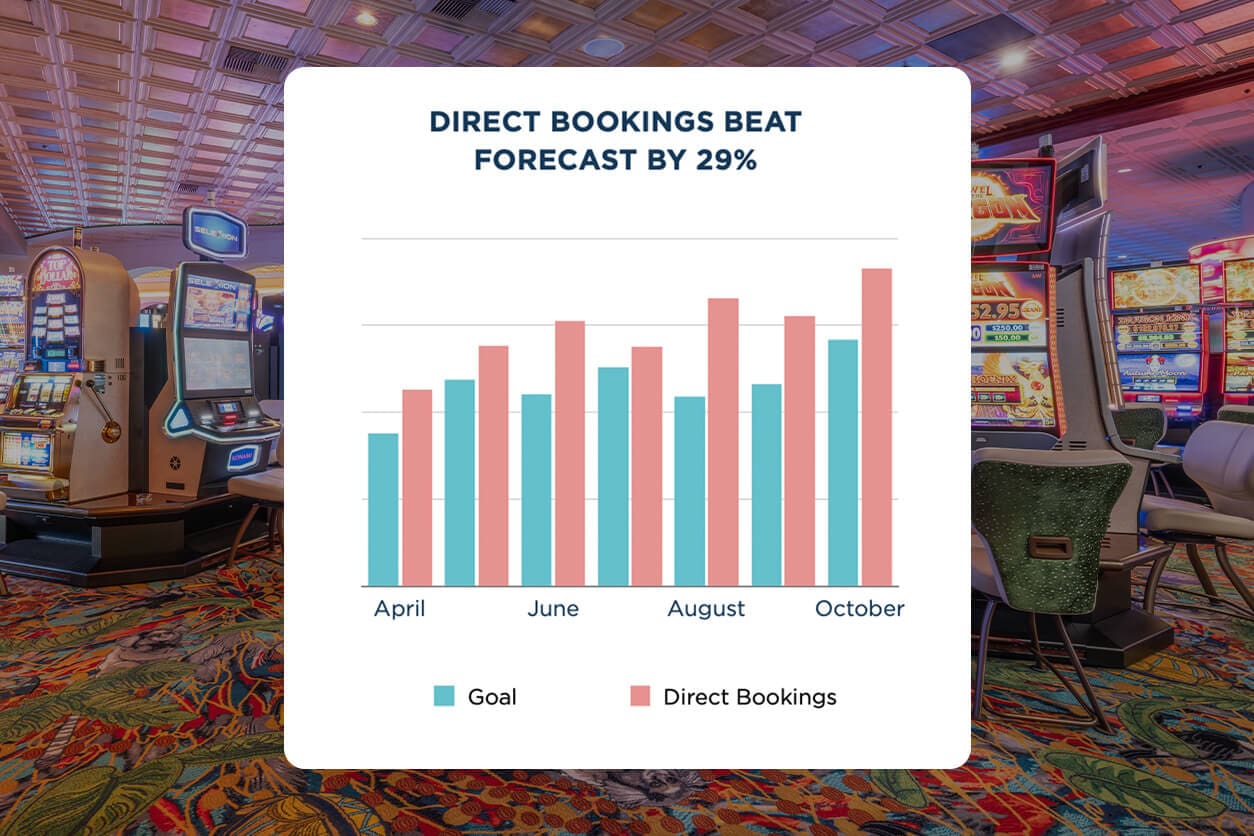
SIX MONTHS. A DIFFERENT STORY.
After just six months with this casino, we saw:
- Customer acquisition costs down 58%
- ROAS up 80%
- Direct bookings running 29% ahead of forecast
And, my personal favorite: 37% incremental lift in out-of-state casino visits from CTV alone. CTV gets written off as a brand-awareness play constantly. This wasn’t inferred, and it wasn’t modeled off some black-box lookalike audience. It was measured based on those exposed to CTV ads vs. those who weren’t.

WHAT THIS MEANS FOR YOUR PROPERTY.
If your paid media dashboards look healthy but direct bookings or other key business results continue to lag, you’re probably not underspending. You’re misattributing.
More budget doesn’t fix that. A framework that actually holds each dollar accountable does:
- Separate incrementality from attribution
- Shift spend toward audiences who wouldn’t have booked without otherwise (true prospects)
- Measure business outcomes, not platform metrics
- Cut OTA dependency by building real direct demand
At 62ABOVE, we don’t optimize towards awesome-looking charts that laud platform “wins” (although our charts on your business results are quite badass). We optimize for true direct growth, which means fewer OTA commissions, lower acquisition costs, more direct revenue, more control. VIA62 isn’t a media buying tool. It’s a performance intelligence layer that keeps every dollar honest.
If your current media strategy is feeding the beast instead of building your business, let’s talk.


2026 Copyright 62ABOVE. All rights reserved.