
62ABOVE hits the pause button on ChatGPT ads
62ABOVE hits the pause button on ChatGPT ads
OpenAI’s ad platform is barely six months old and is entrenched in regulatory and reputational grey areas regarding how AI systems disclose, integrate, and profit from advertising within their LLM environments. We recommend not allocating any client budget to ChatGPT Ads at this time for two main reasons: the speed and circumstances of OpenAI’s reversal on advertising, and the unresolved consumer-trust exposure that reversal has created for any brand appearing inside it.

1. THE REVERSAL: FROM “LAST RESORT” TO LIVE PLATFORM IN TWO YEARS
In May 2024, during a talk at Harvard University, Sam Altman was directly asked about advertising as a business model for ChatGPT. He described advertising as a “last resort”; something he would only pursue if it were the only way to make the product accessible to everyone. His exact quote was: “I think that ads-plus-AI is sort of uniquely unsettling to me.” That’s our sentiment as well.
Roughly twenty months later, that decision was reversed, and not because they had a great case for how users would benefit; it was purely profit-oriented.
As a random aside, I initially put a dash in that last sentence instead of a semicolon, but I was afraid readers might think that this was an AI-generated or AI-assisted article if I did so. This is the type of thing we are dealing with when it comes to AI these days. There is so much grey area that has us questioning what is or isn’t real, what is or isn’t trustworthy… We’ll get to that in the next section, though.

Independent journalist Ed Zitron, in his June 15th article on OpenAI losses, reported that OpenAI lost $38.5 billion in 2025. This was also verified by the Financial Times. While losses are to be expected from tech startups in the LLM space, this is still a staggering number. There are a number of voices that have cited the change of heart being completely financially-centric (this digiday article is an example), and the fact that this was 100% a financial decision vs. a user-centric decision gives us immediate pause.
The velocity at which OpenAI moved from a $200k minimum to being completely open (even available programmatically through multiple SSPs as of this memo’s writing) is also a red flag. OpenAI added an AI-powered ad-variation feature in June 2026, letting advertisers opt in to have ChatGPT generate ad creative for review and approval. Separately, a custom-audience-list upload feature, allowing advertisers to upload their own customer or prospect lists for targeting, surfaced in advertiser accounts in early July 2026, spotted by agency users before OpenAI made any formal announcement about it (per Mediapost). In both cases, advertisers were finding and testing capabilities that OpenAI’s own communications hadn’t yet caught up to.
We are aware that LLM ads are not going anywhere, and there may be some benefits to being early adopters. If it were just this velocity that concerned us, we might not have such a strong POV. The trust piece, however, is the more egregious issue we have.

2. MISINFORMATION IS RAMPANT AND THE ADS WITHIN CHATGPT MAY VERY WELL BE MAKING IT WORSE
In February, a researcher at OpenAI named Zoë Hitzig quit due to the company’s priorities changing for the worse for consumers. This quote summarizes her feelings well:
“It’s against company principles to optimize user engagement solely to generate more advertising revenue, but it has been reported that the company already optimizes for daily active users anyway, probably by encouraging the model to be more flattering and sycophantic.”
This researcher, after spending time in the weeds with colleagues at OpenAI, believes OpenAI is trying to make users feel more dependent on AI for support in their lives. Even if ads are clearly labeled as paid within the platform, consumers aren’t always savvy enough to distinguish what is or isn’t paid, even with labels (according to Clutch, 23% of consumers still don’t feel confident about what is or isn’t an ad in Google search). Add in the fact that there’s not 100% clarity that LLMs won’t integrate ad placements into their learning, and we have an ecosystem ripe for misinformation.
What sparked our desire to document our collective POV was an Ad Week article called “Brands May Be Bankrolling the AI Misinformation Spreading About Them”. This was an interview with Andrew Frank from Gartner (a future-centric analytics company) discussing the danger of dynamic media-buying tools paired with AI hallucinations. Black boxes such as Google and Meta are dynamically analyzing searches and changing ad copy based on those searches; pair that with AI hallucinations, and you have a potential cycle of misinformation that not only causes confusion for consumers but can also damage our brands.
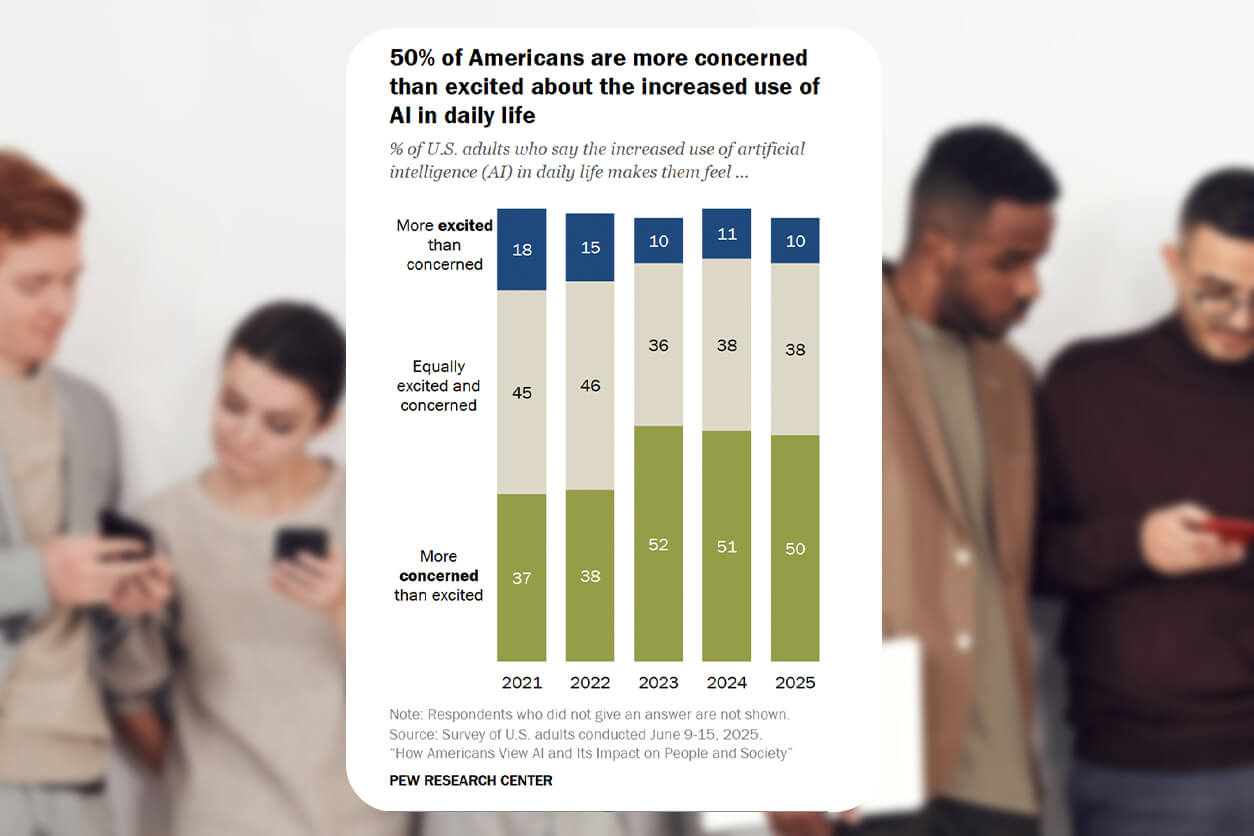
It probably goes without saying, but the lack of trust in AI as it is makes inserting ads even more questionable. According to a PEW research center survey, very few Americans are more excited than concerned about AI and 50% are more concerned than excited.
Without very stringent guidelines in place and without knowing exactly how LLMs will interpret ads, we feel it is irresponsible to have our ads within this environment.
MOVING FORWARD
This is obviously an ever-changing subject and 62ABOVE is consistently watching trends and product evolutions to consider if they are appropriate or best for our clients. We aim to continue sharing our findings along this AI journey and will draft new communication should this overall POV shift.


2026 Copyright 62ABOVE. All rights reserved.